
Unhappy with your item? We offer no-quibble free returns

Sourced through ethical and sustainable accreditations

£3.95 standard UK shipping, or free shipping over £20

Every purchase you make supports wildlife
Squirrel deterrents
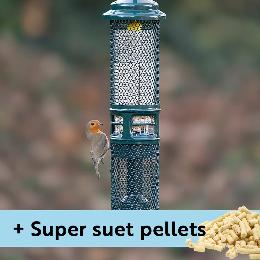
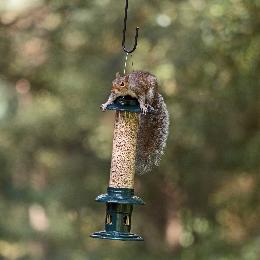
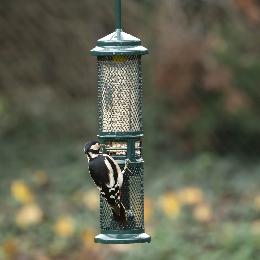
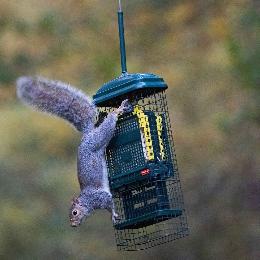
Squirrels are persistent scavengers. They’re expert climbers, and can easily jump on bird feeders from nearby branches and fences, but with the right feeder you can keep them away from your garden bird food. Our squirrel deterrent range includes weight-activated closures, feeder guardians, and feeder pole cones. You can trust in quality when you buy with RSPB:
- Strong and durable design
- Easy-clean mechanisms
- Humane deterrents
- No-quibble free returns policy
Need a ‘squirrel-proof’ seed, suet or peanut feeder - or a pole baffle to stop them climbing? You'll find it here.

Feed Seasonally, Feed Safely:
Bird seed and peanuts are now available to purchase again. From 1 November-30 April you can feed garden birds a full range of bird foods, including seed and peanuts. RSPB feeders are easily dismantled to enable thorough cleaning. As this is vital for reducing disease transmission, you can still buy these products year-round.
Find out more


Squirrel deterrent FAQ
How do I stop squirrels eating bird food?
You can either use one of the many different types of squirrel deterrents or squirrel-proof feeders, or switch to bird foods that squirrels dislike. Seeds like nyjer are naturally less appealing to squirrels (they often ignore them) but are still loved by many finches and other small birds.
What is a squirrel deterrent and do they work?
A squirrel deterrent or repellent is designed to keep squirrels (and often larger birds such as pigeons and crows) away from bird food. There are different types of deterrents:
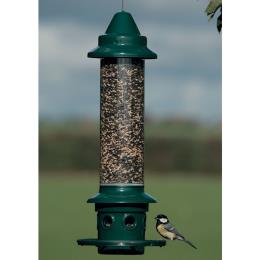
- 'Squirrel-proof' feeders - Weight-activated (spring-loaded) anti-squirrel bird feeders are made so that the weight of the squirrel or large bird landing on it closes the feeding chamber, preventing access to food
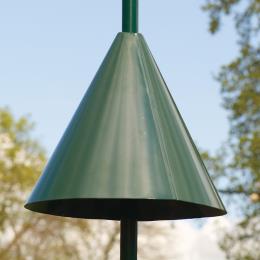
- Pole-mounted, metal cones - These can be used on a feeder pole or feeding station, below bird feeders to deny access from the ground.
- Overhead dome baffles - Hung above a feeder suspended from a branch or wall bracket, these stop squirrels climbing down from above and force them to slide off before reaching the food.
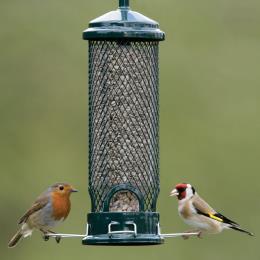
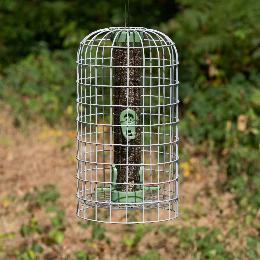
- Feeder guardians (caged feeders) - A metal cage surrounds the feeder, allowing small birds through while physically excluding adult squirrels and larger birds.
How do I stop squirrels climbing my bird feeder pole?
The most effective way is to fit a pole-mounted cone below the feeder. When installed correctly, the smooth, angled surface prevents squirrels from climbing up the pole to reach the feeder. For best results, use a freestanding metal pole, position the cone around 4–5 feet above the ground, and place the feeder well away from trees, fences or walls that squirrels could jump from.
What's the difference between a squirrel baffle and a squirrel-proof feeder?
A squirrel baffle is a physical barrier that blocks squirrels from reaching a feeder by climbing up from below or down from above. It controls access to the feeder but does not affect how the feeder itself works. These are usually a metal cone placed below a bird feeder on a pole, or a dome that sits above the feeder, used on feeders hanging from trees or wall brackets.
A squirrel-proof feeder, by contrast, is designed to stop squirrels once they reach the feeder. Many use weight-activated (spring-loaded) mechanisms that close the feeding ports when a heavier animal lands. These control feeding, not access.
In squirrel-prone gardens, the most reliable setup often combines both: a squirrel-proof feeder and a correctly positioned baffle.
Bird feeder FAQs
What is a caged bird feeder?
A caged bird feeder is a seed, nut or suet feeder surrounded by a structure with gaps for birds to fly through. RSPB bird feeder cages, or guardians as we call them, are made from strong powder-coated steel. The gaps allow smaller garden birds, such as tits, finches and sparrows, to reach the food while helping to restrict access for larger birds and squirrels. This can give smaller birds more opportunity to feed and reduce the amount of food taken by larger visitors, although the species excluded will depend on the size of the cage openings.
What is the best bird feeder for sunflower hearts?
The best bird feeder for sunflower hearts is a standard seed feeder with feeding ports that allow birds to perch and take the small, husk-free kernels easily. Our RSPB Classic easy-clean® seed feeder is a good-value option, while the RSPB Ultimate easy-clean® seed feeder has more durable metal fittings and is better suited to gardens regularly visited by squirrels or parakeets.
Where squirrels are likely to take food from the feeder, a weight-activated option such as the Squirrel Buster feeder can help restrict their access. Whichever feeder you choose, look for one that can be taken apart easily for regular, thorough cleaning.
What is the best fat ball bird feeder for garden birds?
The best fat ball bird feeder is a sturdy, wide-mesh feeder that holds the fat balls securely while allowing birds to cling and feeder easily. The RSPB Classic easy-clean® suet feeder is a good everyday choice, holding three or four fat balls and coming apart for straightforward cleaning.
For added protection from wet weather, choose a design with a roof, such as the Suet ball basket feeder with roof. The Dual suet feeder is a versatile alternative that can hold up to five fat balls as well as suet cakes. Whichever style you choose, avoid putting fat balls out in plastic netting, as birds can become tangled in it, and clean the feeder thoroughly at least once a week.
What is the best fat ball feeder for small birds?
The best fat ball feeder for small birds is usually a squirrel-proof fat ball feeder surrounded by a protective guardian cage. The gaps allow smaller birds, such as Blue Tits, Great Tits, Coal Tits and House Sparrows, to reach the fat balls while helping to restrict access by squirrels and larger birds such as pigeons.
The RSPB Suet feeder and guardian is a suitable option for gardens where squirrels or larger birds regularly take the food. Its outer cage gives smaller birds more opportunity to feed undisturbed, while the feeder inside holds the fat balls securely.
Bear in mind that squirrels are persistent and may occasionally find ways around deterrents, particularly if a feeder is positioned close to a fence, tree or other jumping-off point. Hang the feeder away from nearby surfaces where possible, use fat balls without plastic netting and clean it thoroughly at least once a week.
How do I clean bird feeders?
Make sure you clean your bird feeder outside. Wear waterproof gloves and have a warm, soapy bucket of water on hand.
1. Throw any leftover food from your bird feeder away into a bin.
2) Fully dismantle your bird feeder.
3. Use a non-toxic disinfectant like Ark-Klens or a mild (5%) bleach solution and a long-handled cleaning brush to scrub away any old food, waste and debris and clean the feeder.
4) Rinse the individual parts of the feeder with fresh water once cleaned. Leave outside to dry and ensure they are completely dry before you reassemble.
5. If possible, we advise you to move your bird feeders weekly to avoid the build-up of contaminated debris underneath. Any existing debris should be cleared up.
How often should I clean my bird feeder?
Bird feeders should be cleaned at least once a week to ensure any old food or debris is removed and to prevent the spread of infectious diseases. If possible, place your feeders in a different spot after each clean to prevent the build-up of debris underneath.