
Unhappy with your item? We offer no-quibble free returns

Sourced through ethical and sustainable accreditations

£3.95 standard UK shipping, or free shipping over £40

Every purchase you make supports wildlife
Bird feeders for small birds
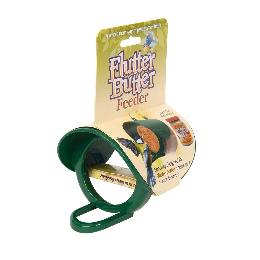
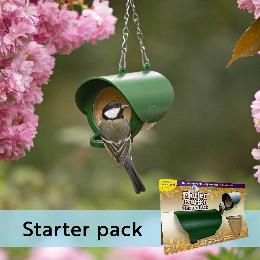
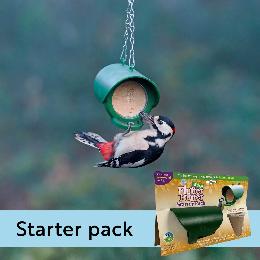
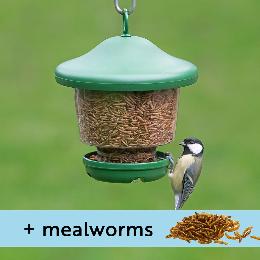
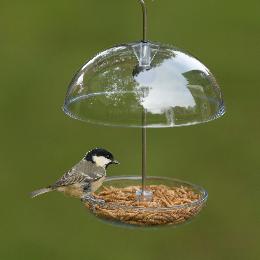
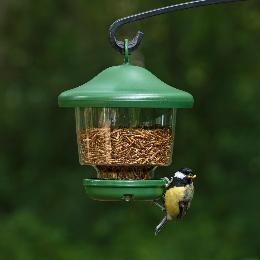
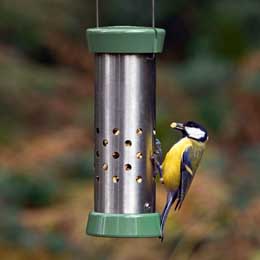
Small birds like Robins, Blue Tits, sparrows, and Goldfinches need feeders that keep larger birds such as Woodpigeons, Magpies and crows from taking their food. At the RSPB, every feeder in this range is designed to suit smaller species, with small ports and tight cage spacing that physically prevent bigger birds from feeding alongside them. Whether you're looking for a suet feeder, mealworm feeder, seed feeder or a feeder with a guardian, you'll find options here that let your garden's smaller birds feed in peace.

FAQs about feeding small birds and deterring large birds from feeders
What is the best feeder for Robins?
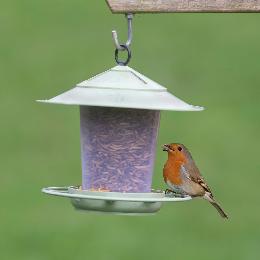
Robins are natural ground feeders, but flat feeding surfaces such as bird tables and ground trays can increase the risk of disease spreading between birds, so we always recommend using a hanging feeder instead. Robins will readily use a mesh or caged hanging feeder filled with mealworms or suet pellets, which allow them to cling and peck while keeping food contained and hygienic.
You can also make your garden naturally attractive to Robins by growing plants that provide food. Robins love berry-bearing shrubs like holly, rowan, and hawthorn, as well as plants that attract insects and worms.
How can I stop pigeons from eating all the bird food?
How can I stop crows and Starlings at feeders?
A robust caged feeder is the most reliable option. Guardians with 35-40mm gaps will exclude crows and most Starlings while allowing smaller birds such as Robins, tits and sparrows to feed safely inside.
Crows are highly intelligent and persistent, so fully enclosed cages tend to work better than simple guardian rings. Positioning feeders away from flat surfaces and fences also helps reduce opportunistic access from larger birds.
What feeders are specifically for Blue Tits and sparrows?
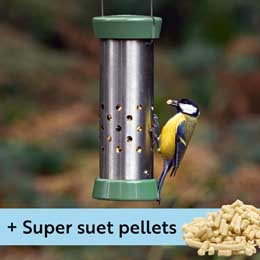
Blue Tits and Great Tits do best with hanging tube feeders with small ports, which suit their agile feeding style and prevent larger birds from accessing the food.
House Sparrows prefer a wider perch and space to feed together, so seed feeders with more area to perch work particularly well, allowing several birds to feed at once without competition.
What is the best Magpie deterrent?
Magpies are quite large, extremely clever and adaptable birds. They’re entertaining to watch but if you’re having trouble with them eating all your bird food or damaging bird feeders you can buy solutions such as the Medusa bird feeder defender from RSPB Shop.
Feeders and accessories to deter Magpies:
Try pairing a sturdy feeder with a guardian. The gaps in the guardian are too small for Magpies to reach through, and the feeder should resist potential damage from Magpies’ beaks.br>
Magpies can be your friend, though, as they will eat harmful insects and rodents.