
Unhappy with your item? We offer no-quibble free returns

Sourced through ethical and sustainable accreditations

£3.95 standard UK shipping, or free shipping over £20

Every purchase you make supports wildlife
Bat boxes
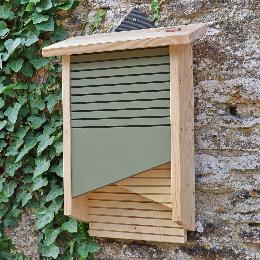
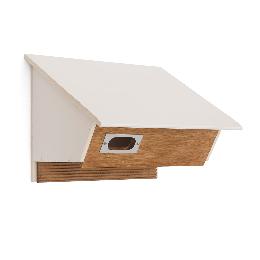
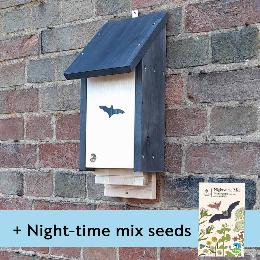
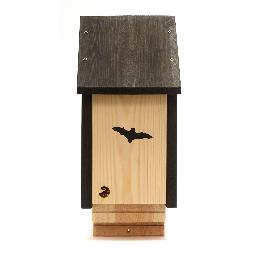
Bats usually choose to roost in tree holes, dingy tunnels and buildings which are becoming very scarce due to globalisation and change in landscapes. Bat boxes are artificial roosts designed to encourage bats in residential gardens. Choose from our various designs of solid and durable timber bat boxes with sufficient insulation, providing them a safe place in your garden to raise their pups, sleep during the daytime, and hibernate during the winter months. The boxes should be placed as high as possible in a warm spot, helping the bats to locate them. It might take some time to find their new house so try to install them in early autumn. Try planting some native wildflowers to attract bats, and identify the species in your garden with a bat detector


Bat box FAQs
Is a bat house a good idea?
How to attract bats to a bat house?
Attracting nocturnal insects to scented flowers, herbs, and night-blooming plants will help to attract bats. Dahlia, French marigold, nicotiana, evening primrose, thyme, raspberry, or honeysuckle are all good choices for plants to place near or around your bat box. The location, position and temperature are also critical. Bats prefer temperatures between 85 and 100 degrees Fahrenheit, so bat boxes should ideally be faced south.
Where is the best place to put a bat box?
A bat box should ideally be mounted at least 4-5 metres high on a wall or mature tree, or under the eaves of a house. Bats are more likely to find bat houses if they are placed near woodland or water boundaries, where bats are more likely to fly. While they can be mounted on trees, this may allow predators to access them. Furthermore, trees may also provide too much shade; bat houses require at least 6-8 hours of direct sunlight to function properly. Keep the box away from artificial light, such as security lights and windows, as light disturbs bats.
When should you put up a bat house?
Bat homes can be installed at any time of the year, but if installed before the bats return in the spring, they are more likely to be used in early summer.
What is the best bat box for a garden?
The best bat box has two chambers or crevices of different sizes, a grooved or rough surface so bats can climb in, and is made from durable, well-insulated material such as untreated timber, ideally sustainably sourced. Our Double chamber bat box suits Pipistrelle, Brown Long-eared and Noctule bats.
Which bats use a bat box?
Pipistrelle, Brown Long-eared and Noctule bats use bat boxes. Pipistrelles roost in smaller chambers, while Brown Long-eared and Noctule bats prefer larger ones. Only one species roosts in a box at a time.
Is a timber or woodcrete bat box better?
Both are suitable. Untreated timber, ideally sustainably sourced, is the usual choice for gardens and is well insulated. Woodcrete lasts longer.
Do bat boxes need maintenance, and can I look inside?
Bat boxes need no maintenance. Bats are protected by law, so only a licensed bat worker may open a box. You can check for use without disturbing them: look for mouse-sized droppings under the box, or watch from a distance at dusk.