
Unhappy with your item? We offer no-quibble free returns

Sourced through ethical and sustainable accreditations

£3.95 standard UK shipping, or free shipping over £20

Every purchase you make supports wildlife
Bird feeders
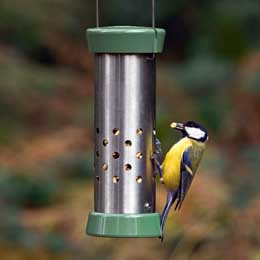
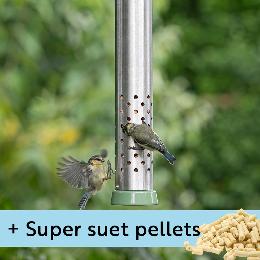
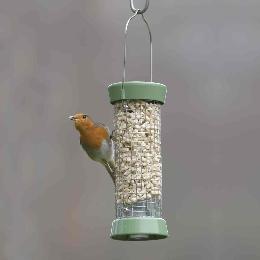
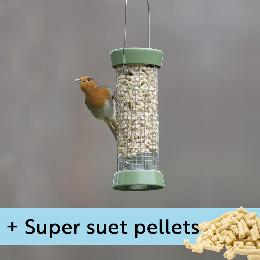
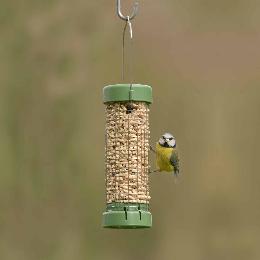
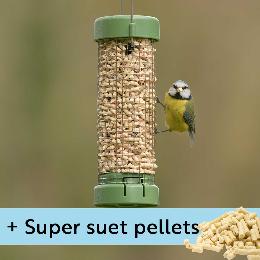
Bird feeders will attract a wide variety of wild birds to your garden, with different types of feeders being better for different bird species and food. Choose from a range of seed, suet & nut feeders.
Unsure about which type of feeder you need? We've put together a short guide on bird feeders here.
Cleaning advice
It is vital you regularly clean your bird feeders to help prevent the spread of disease. A thorough clean at least once a week is recommended to keep birds safe. Take a look at our bird safety and hygiene products for advice on keeping feeding areas nice and clean.



Bird feeder FAQs
What is a caged bird feeder?
A caged bird feeder is a seed, nut or suet feeder surrounded by a structure with gaps for birds to fly through. RSPB bird feeder cages, or guardians as we call them, are made from strong powder-coated steel. The gaps allow smaller garden birds, such as tits, finches and sparrows, to reach the food while helping to restrict access for larger birds and squirrels. This can give smaller birds more opportunity to feed and reduce the amount of food taken by larger visitors, although the species excluded will depend on the size of the cage openings.
What is the best bird feeder for sunflower hearts?
The best bird feeder for sunflower hearts is a standard seed feeder with feeding ports that allow birds to perch and take the small, husk-free kernels easily. Our RSPB Classic easy-clean® seed feeder is a good-value option, while the RSPB Ultimate easy-clean® seed feeder has more durable metal fittings and is better suited to gardens regularly visited by squirrels or parakeets.
Where squirrels are likely to take food from the feeder, a weight-activated option such as the Squirrel Buster feeder can help restrict their access. Whichever feeder you choose, look for one that can be taken apart easily for regular, thorough cleaning.
What is the best fat ball bird feeder for garden birds?
The best fat ball bird feeder is a sturdy, wide-mesh feeder that holds the fat balls securely while allowing birds to cling and feeder easily. The RSPB Classic easy-clean® suet feeder is a good everyday choice, holding three or four fat balls and coming apart for straightforward cleaning.
For added protection from wet weather, choose a design with a roof, such as the Suet ball basket feeder with roof. The Dual suet feeder is a versatile alternative that can hold up to five fat balls as well as suet cakes. Whichever style you choose, avoid putting fat balls out in plastic netting, as birds can become tangled in it, and clean the feeder thoroughly at least once a week.
What is the best fat ball feeder for small birds?
The best fat ball feeder for small birds is usually a squirrel-proof fat ball feeder surrounded by a protective guardian cage. The gaps allow smaller birds, such as Blue Tits, Great Tits, Coal Tits and House Sparrows, to reach the fat balls while helping to restrict access by squirrels and larger birds such as pigeons.
The RSPB Suet feeder and guardian is a suitable option for gardens where squirrels or larger birds regularly take the food. Its outer cage gives smaller birds more opportunity to feed undisturbed, while the feeder inside holds the fat balls securely.
Bear in mind that squirrels are persistent and may occasionally find ways around deterrents, particularly if a feeder is positioned close to a fence, tree or other jumping-off point. Hang the feeder away from nearby surfaces where possible, use fat balls without plastic netting and clean it thoroughly at least once a week.
How do I clean bird feeders?
Make sure you clean your bird feeder outside. Wear waterproof gloves and have a warm, soapy bucket of water on hand.
1. Throw any leftover food from your bird feeder away into a bin.
2) Fully dismantle your bird feeder.
3. Use a non-toxic disinfectant like Ark-Klens or a mild (5%) bleach solution and a long-handled cleaning brush to scrub away any old food, waste and debris and clean the feeder.
4) Rinse the individual parts of the feeder with fresh water once cleaned. Leave outside to dry and ensure they are completely dry before you reassemble.
5. If possible, we advise you to move your bird feeders weekly to avoid the build-up of contaminated debris underneath. Any existing debris should be cleared up.
How often should I clean my bird feeder?
Bird feeders should be cleaned at least once a week to ensure any old food or debris is removed and to prevent the spread of infectious diseases. If possible, place your feeders in a different spot after each clean to prevent the build-up of debris underneath.